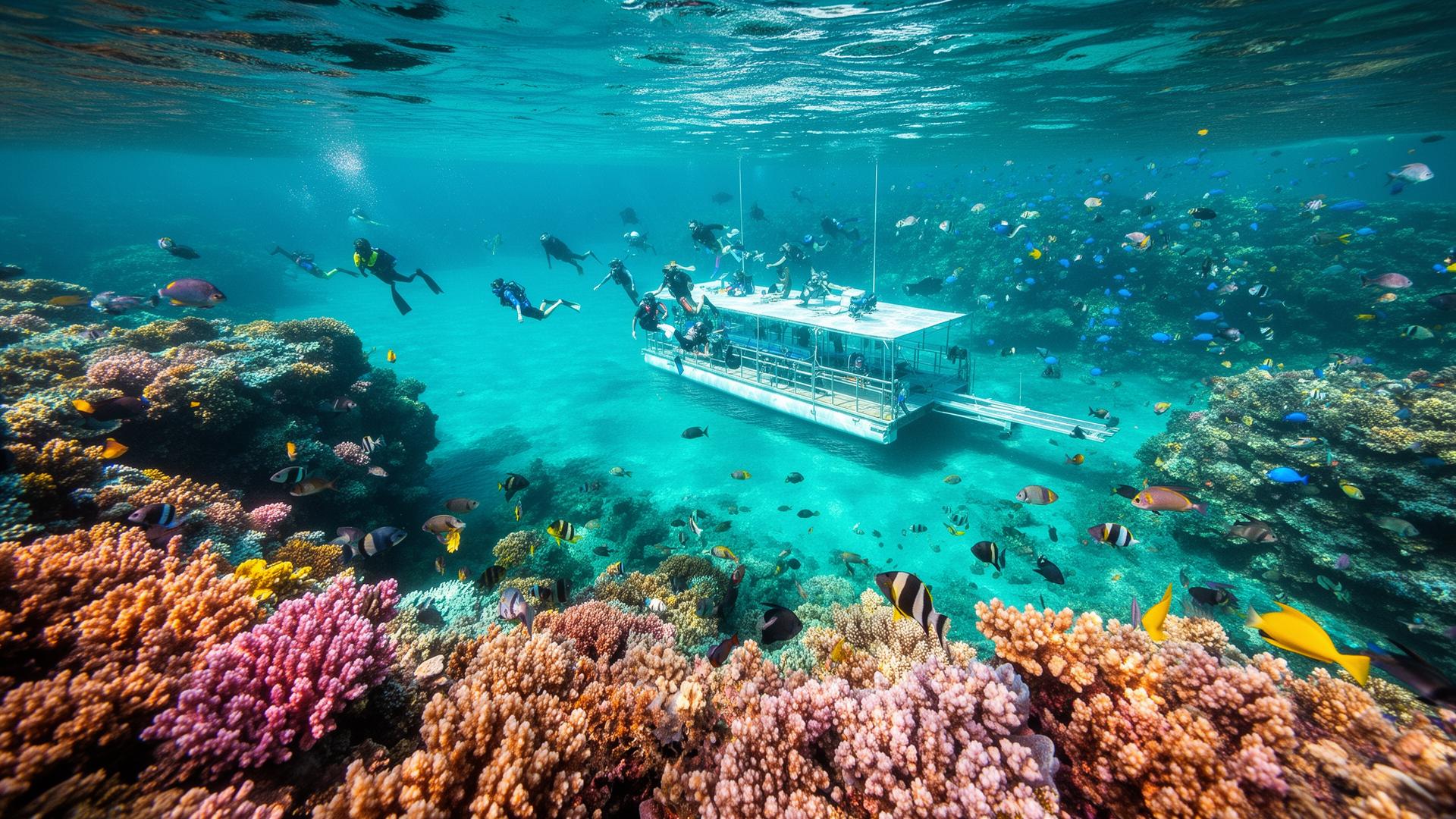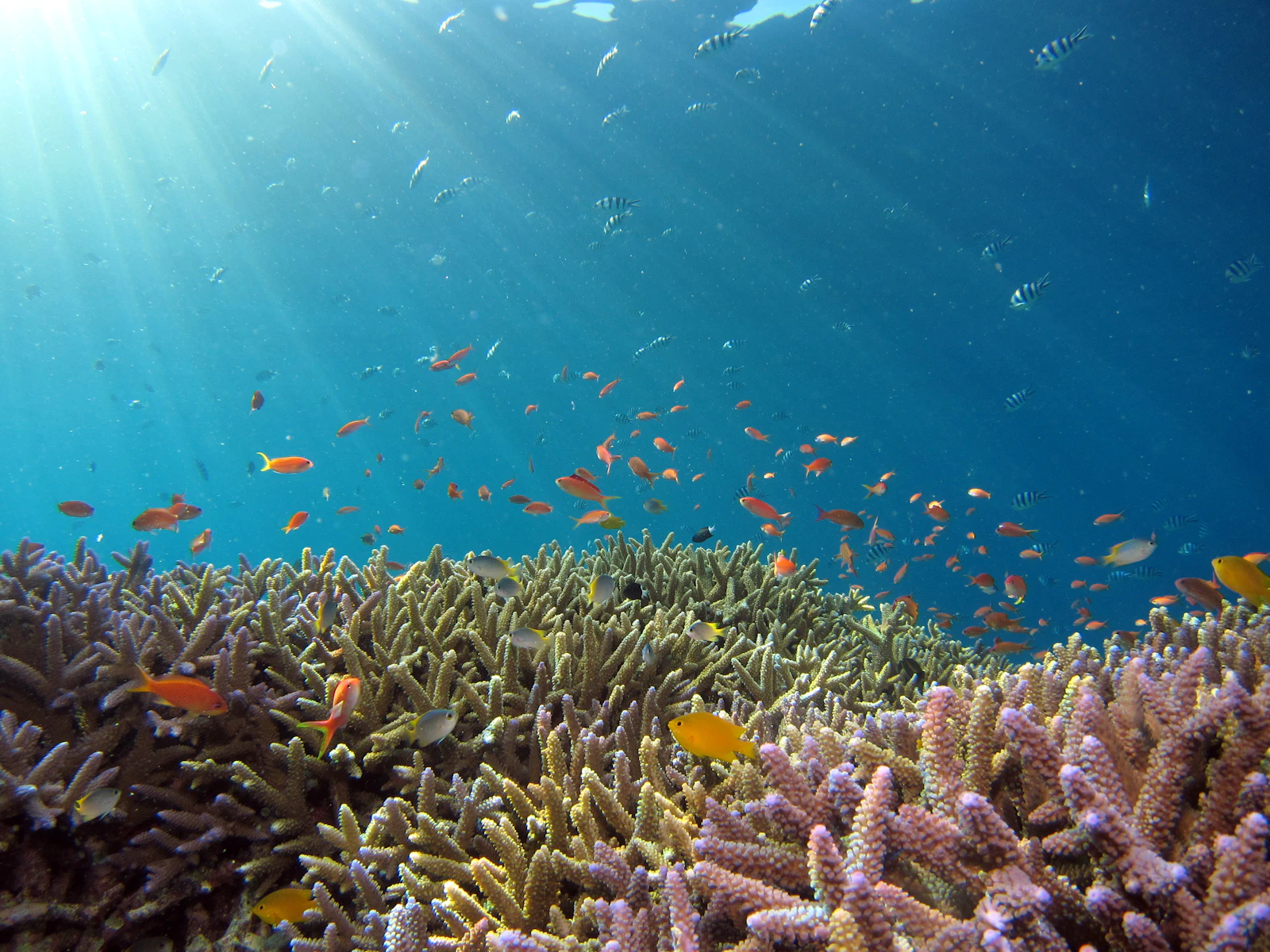
The fringing reefs around the inner Whitsunday islands are warm, sheltered, and surprisingly biodiverse — you don't need to go all the way to the outer Great Barrier Reef to see giant clams, parrotfish, turtles and the occasional reef shark. A typical day starts at Port of Airlie around 8:30am on a fast catamaran. The skipper picks two sites on the day based on wind and tide — popular ones include Manta Ray Bay off Hook Island, Mantaray Bay's southern bommies, Luncheon Bay, and Blue Pearl Bay off Hayman. Each stop runs around 90 minutes in the water with a guide leading optional snorkel tours for less confident swimmers. Gear, stinger suits and prescription masks are usually included. Lunch is served between sites. You're back at the marina by 4pm, leaving the afternoon free. The water visibility ranges from 8m on cloudy days to 20m on a good one; September and October are typically the clearest. This is the most efficient way to see live coral if you don't have time for an overnight charter.
Highlights
- ✓Two snorkel sites chosen on the day for best conditions
- ✓Free use of mask, snorkel, fins and stinger suit
- ✓In-water guided tours for non-confident swimmers
- ✓Lunch and afternoon snacks included
- ✓Smaller group than Reef pontoon trips
What to expect
Before
Eat a light breakfast. Apply reef-safe sunscreen before boarding — most operators ban regular sunscreen onboard to protect the coral.
During
Two long snorkel sessions with a hot lunch in between. Crew help fit gear and offer pool noodles for floatation.
After
Rinse your gear at the marina. Most people grab a cold drink at the foreshore and watch the boats come in.
Practical info
- Best time to go
- August to November for the clearest visibility. Avoid windy SE swells in July if you're prone to seasickness.
- What to bring
- Swimwear, towel, reef-safe sunscreen, GoPro if you have one, a long-sleeve rashie for sun.
- Booking tips
- Tuesdays and Wednesdays are quietest. Book direct rather than through the marina kiosks for better prices.
- Accessibility
- Steps in and out of the water from the back of the boat. Floatation devices freely available.